
For many people, Groundhog Day has been an important annual tradition. A fun tradition where a groundhog comes out every February second to see its own shadow in order to determine and predict the arrival of six more weeks of winter or an early spring. The role of the groundhog is believed as an act of a weather forecaster, whenever the sun comes out, then it’s ready to predict.
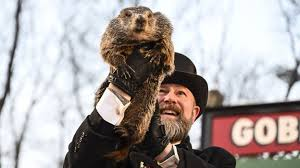
During the early hours of February second, long before sunrise broke over western Pennsylvania, thousands of spectators filled the grounds of Gobbler’s Knob awaiting the annual emergence of Punxsutawney Phil. Punxsutawney Phil serves as a groundhog in Punxsutawney, Pennsylvania who serves as a central figure for the annual Groundhog Day celebration on February 2. Clad in scarves, and winter coats, anticipation rose visitors stood shoulder to shoulder as music played whilst waiting for one of America’s winter traditions to arise.
Groundhog Day in Punxsutawney dates back to 1887, when local residents first turned to a groundhog to forecast the coming weeks of winter. Originating when the Germans who settled in Pennsylvania in the 1700s brought custom to America. The ceremony has been organized by the Punxsutawney Groundhog Club.
Folklore plays a pivotal role in this tradition. Even with no actual importance in the seasons, according to folklore, if Phil sees his shadow upon leaving his burrow, winter is expected to continue for six more weeks. If he does not see his shadow, an early spring is predicted. The announcement, delivered shortly after sunrise, is broadcast nationwide and covered by media outlets from across the globe.
Although, the groundhog that took place in Punxsutawney only has a 40% of accuracy, the second groundhog, named “Staten Island Chuck” that takes his place in for New York city at the Staten island Zoo has a 80% chance of accuracy in the arrival of spring since 1981.
The tradition traces its roots to German immigrants who settled in Pennsylvania and brought with them Candlemas customs. In Europe, hedgehogs were believed to predict seasonal changes; in the United States, the groundhog became the chosen forecaster. Over time, the event evolved from a small-town gathering into a major tourist attraction that draws tens of thousands of visitors annually.